

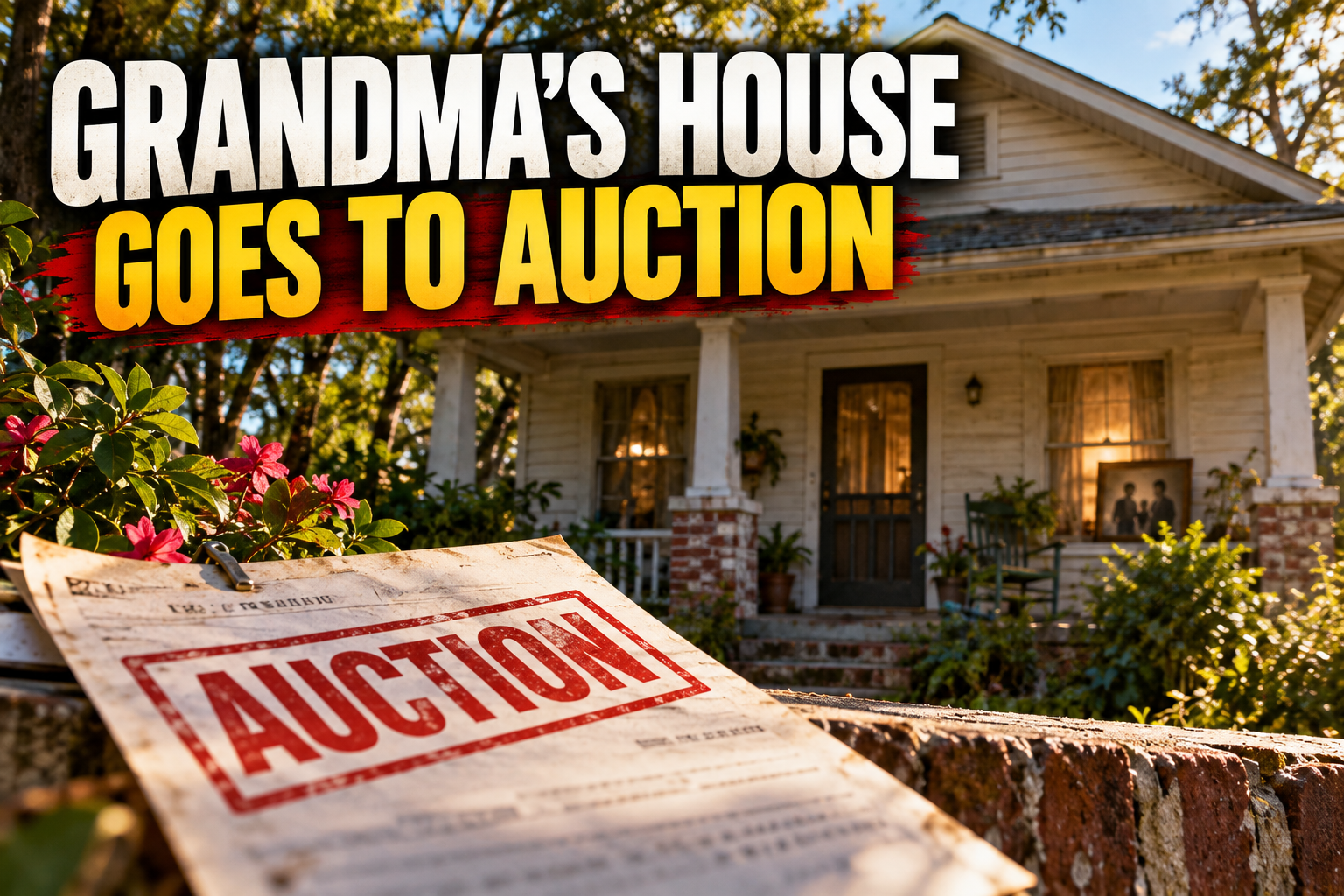
This week I found a house the county values at over $110,000. It’s headed to auction over less than $9,000 in back taxes.
The owner passed away years ago. Her name is still on the county records, with one extra word stuck on the end: ESTATE.
That’s what a tax deed situation looks like up close. I spend a lot of my time trying to reach families like hers before the auction, and I’ll be straight with you. It’s the most frustrating, time-eating, gut-punching work I’ve done in real estate. Online, people make it sound simple. Find the family, help them see their options, and nobody loses the house for nothing.
This is what it actually looks like.
Nobody hands you a tax deed list
There’s no master list of tax deed properties. Every county runs its own auction calendar, so I pull them one county at a time. Every auction date is a click. Every case is another click. Parcel number, address, opening bid, assessed value, sale date. Copied by hand. If the county does provide you with a big master list spreadsheet, there will typically be several thousand properties on it, and not all of them are in need of my help. So I’m usually going to cut out anyone that is less than 2 years behind on taxes. Then I’ll cut and trim the list down even more depending on other factors.
Then come the holes. Vacant lots don’t have street addresses. The opening bid isn’t what’s actually owed. One county shows the payoff down to the penny. The next one locks the account and tells you to “Call DQ Tax Dept.” The one after that runs on a completely different system than every county around it.
By the time one row in my spreadsheet is filled in, I’ve been on four different websites. Now do that a few hundred times. Sometimes a thousand.
Then I delete most of it
After all that work, most of the list goes in the trash.
Bank owned? Gone. They’ll protect their loan. City, county or school board? Gone. Big investors with hundreds of properties? Gone. They either let it slide on purpose or they’ll catch it in time. Trusts and LLCs built so nobody can find the real owner? Gone.
Then there are the ones that get paid off. In one batch I checked, about one in five had already been redeemed. Most of those were paid in the three weeks right before I looked. Honestly, good for those families. But it means you can do hours of work on a house that’s off the table before you ever pick up the phone.
What’s left are the ones I actually care about. One house or one lot, owned by a regular person, a family, or an estate. Usually a small slice of where I started.
The name on the list is wrong more than you’d think
I pull up the county property card for every single house. It changes the story more often than it doesn’t.
In one small batch, here’s what the cards showed me. A second owner my list never mentioned. A house split three ways between brothers, a third each. A lot owned 25%, 25% and 50% by three different people. One where the person on my list wasn’t an owner at all. One owner whose mailing address is now in another country. And one with that word again: ESTATE.
Then there’s the name problem. Search James Johnson or Mary Williams and you get dozens of people. Different ages, different cities, different lives. You match them up by the property address, the mailing address and the ages, and you pray you picked the right one. Pick wrong and you’re emailing a total stranger about “your grandmother’s house.”
LLCs are their own puzzle. You look them up on the state business registry, find the officers, and hope it’s a real person and not a law firm or a filing service.
Most of the owners are gone
Nobody says this part out loud, so I will. A lot of tax deed owners are dead.
Think about it. A house is paid off. It’s worth six figures. It’s about to be sold over a few thousand dollars. Nobody lets that happen on purpose. The person who used to pay that bill stopped paying, and very often it’s because they passed away and nobody stepped up.
It gets messier with more than one owner. A husband and wife, both gone. Three siblings, two of them gone. Now the real owners are the heirs of the heirs. Nieces, nephews, grandkids, a second wife, kids from another marriage. Some live in state, some don’t, and some have never even seen the house.
So I stopped looking for the owner. I look for the family. Spouses, kids, whoever lives in the house, relatives with the same last name. Anybody who can pick up the phone and say “yeah, that was my mom’s place.”
Finding the family, then getting ghosted
Just finding a way to reach the family is hard. The people-search sites and skip-tracing services (companies that dig up current contact info for people who are hard to find) hand you phones and emails, but a lot of it is stale. A college email from 20 years ago. A work email from a job they quit. An internet provider that went out of business.
So I run every email through a verification service before I send anything. In one batch of 38, about a third came back dead, risky or unverifiable. You pay to find the email, then you pay again to find out it doesn’t work.
When I do write, I keep it straight. Who I am. Which property. The auction date. That if nobody pays the back taxes, the family loses it. If you want to keep it, call the county. If you’d rather sell, call me, and please don’t wait.
Then, most of the time? Nothing.
Some people think it’s a scam. Some figure it was grandma’s house, not theirs, so it’s not their problem. Some just don’t open email from strangers. I don’t blame them. If somebody I didn’t know emailed me about my late grandmother’s house, I’d be suspicious too. That’s exactly why I tell them to call the county first, not me.
Some of these properties aren’t worth saving
Even when the stars line up, the property might not be worth it.
If nobody has paid the taxes in years, nobody has paid for a roof, a water heater or an AC unit either. I walk into houses that need $50,000 just to be livable. Sometimes more.
The land can be worse. Leftover slivers from old subdivisions. Drainage strips. Wetland. Lots with no road touching them at all. You can’t build on a landlocked lot, and nobody wants to buy one. That’s often why the taxes stopped in the first place. The owner decided it was worthless and walked away.
So before I spend a single minute looking for a family, I pull the lot up on a map. I’d rather put my time into families I can actually help.
Everybody calls in the last week
This is where most families lose out. When the family finally calls back, it’s almost always a week or two before the auction. Sometimes it’s the day before.
And by then, there’s nothing left to work with.
When the owner has passed, nobody can just sign a deed. Depending on the situation you might need:
- Probate, so a court names somebody who can legally sell. That takes months, not days.
- An affidavit of heirship, where every heir signs off on who owns what. Every single one has to be found, and every single one has to sign.
- A title attorney, to deal with liens, judgments, old mortgages, code fines, and the one cousin who won’t sign anything.
- A title company willing to insure the sale, which won’t happen until all of the above is clean.
That all costs money and it all takes time. None of it happens in ten days. The only thing that truly stops the clock is paying the back taxes, and most families can’t or won’t. So time runs out, and the house goes to whoever bids highest.
Here’s the part almost nobody knows. If the house sells at auction for more than what was owed, that extra money doesn’t disappear. The clerk holds it as surplus, and the owner or heirs can claim it. But they have to know it exists, and they have to prove they’re the heirs. Which puts them right back in the same paperwork they avoided.
Why grandma’s house really goes to auction
I’ve seen this story so many times I could tell it in my sleep.
Grandma passes. There’s no will, or there is one and nobody files it. One family member moves in, or was already living there. They’re not paying rent, and they’re not paying the taxes either. Everyone else either doesn’t know, doesn’t want to deal with it, or doesn’t get along with whoever’s living there. Nobody wants to be the one who pays, because then they’re paying for someone else to live there free.
So everybody waits. Brothers and sisters stop talking. Cousins assume somebody else is handling it. The county’s letters go to a house where nobody opens the mail. And one morning the house sells on a county website to a stranger, for a fraction of what it’s worth.
In a lot of Haitian families, grandma’s house is more than a house. It’s where everybody landed when they first came over, where the holidays happen, where somebody always fixed you a plate. We have a saying: men anpil, chay pa lou. Many hands make the load light. Split between five brothers and sisters, a few thousand in back taxes is a lot lighter than losing the house everyone grew up in.
It’s usually not that the family doesn’t care. It’s that nobody is in charge. Five heirs with five opinions and no plan means doing nothing is the easiest option. Right up until it isn’t.
If your family’s house is headed to a tax deed auction
If you’re reading this because you got a letter or an email about a family property, from me or anybody else, here’s what I’d do if I were you:
- Call the county tax collector today. Ask what’s owed and when the auction is. Don’t wait for someone else in the family to do it.
- If you want to keep it, pay it. Paying the back taxes before the sale stops the auction. Sort out who owns what later. At least the house is still in the family.
- If nobody can pay, look at selling before the auction. Selling beforehand almost always leaves more money for the family than a courthouse sale does.
- If it already sold, ask the clerk about surplus funds. You might be owed money and not know it.
- If the owner has passed, talk to a probate or real estate attorney now. Every week you wait takes an option off the table.
I’ll be upfront about what I do. I buy houses and land, including ones with messy titles, missing heirs and probate. I’d much rather work something out with a family than watch grandma’s house go to a stranger for pennies.
If that’s you, fill out the form on this site and I’ll call you back within 48 to 72 hours. Just please, don’t wait until the last week.