

There is a Haitian proverb that says “kay koule twonpe solèy, men li pa twonpe lapli.” A leaky house can fool the sun, but it cannot fool the rain.
A messy title works the same way. Title is simply the legal record of who owns a property and who has a claim against it. For years, a house can look fine from the street. Somebody cuts the grass. Somebody may even live there. Then the day comes to sell, the title search gets ordered, and the rain shows every hole in the roof.
The property may have plenty of equity. The family may be ready to sell. There may even be a buyer waiting. If the title is not clear, none of that matters yet.
The good news is that a messy title does not always mean the deal is dead. Most of the time it comes down to three things: figuring out exactly what happened, identifying the people involved, and finding out which documents are needed to repair the chain of title. The chain of title is the line of recorded transfers from one owner to the next, going all the way back.
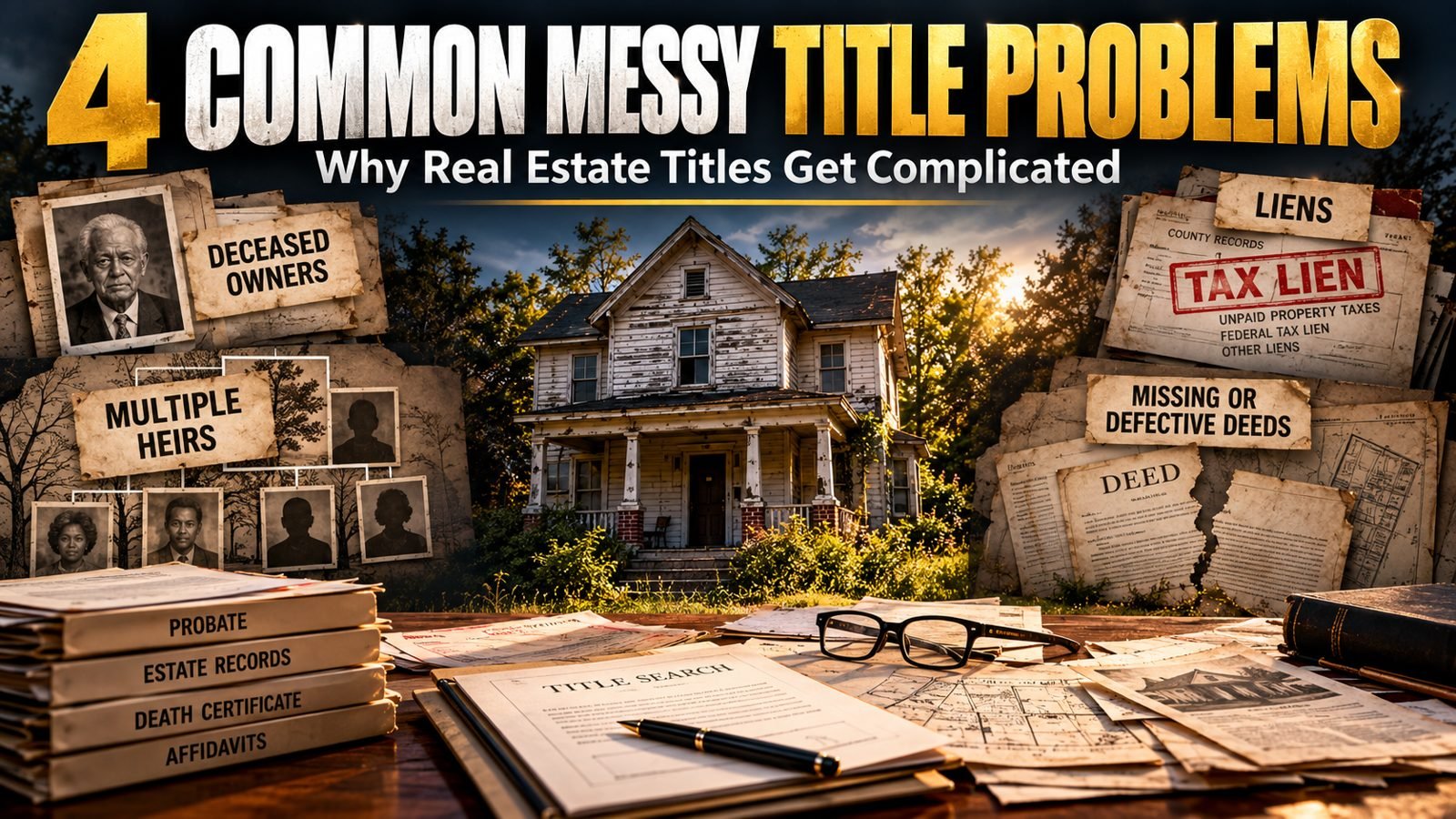
Four situations cause most of these problems: owners who passed away, heirs and family disputes, old liens, and deeds that are missing or defective.
1. The Owner Passed Away and Nobody Touched the Paper
This is the most common cause, and the simplest one.
Somebody buys a house 30 or 40 years ago. The children grow up and move away. One is up north, one is in another country, one stopped calling. Papa or Manman stays in the house until the end.
Haitians say “bèl antèman pa di paradi.” A beautiful funeral does not guarantee paradise. The family can give a proper send-off, with the church full, the white suits, and the food for everybody after. That still does not settle what was left behind.
Nobody opens probate, which is the court process that moves a deceased person’s property into the names of the people who inherit it. Nobody transfers the house. After a while, nobody pays the property taxes either.
Ten or fifteen years go by and the house is still titled in the name of someone who is no longer living. Sometimes the family did not have the money for probate at the time. Sometimes nobody understood what had to be done. So the house just sat.
With a property like this, the first step is finding out what happened to the owner and rebuilding the family on paper:
- Who were the owner’s children?
- Was the owner married?
- Did any of the children pass away afterward, and who inherited from them?
- Was there a will?
- Was probate ever opened?
- Did anyone ever sign a deed giving up their share?
That is reconstructing the ownership history, and sometimes it goes back several generations. Once the family tree and the possible ownership shares are clear, an attorney or title professional can say what documents or legal process it will take to clear the title.
2. Heirs and Family Disputes
Any time someone passes away owning real estate, more than one person may inherit a piece of it. That gets complicated fast.
One cousin says, “Grann told me she was giving me the house.” A brother remembers it differently. A sister believes it was supposed to be split evenly. Thirty years later Grann is gone and everybody tells the story their own way.
“Bay kou bliye, pote mak sonje.” The one who gives the blow forgets, the one who carries the scar remembers. Old family hurts have a long memory, and they show up at the closing table.
Without a will or recorded documents, those disagreements turn into a stalemate. Probate gets started and never finished. Nobody has money to keep paying attorneys. Relatives stop speaking. One heir simply refuses to cooperate.
Meanwhile the house keeps sitting. Taxes pile up. The roof gets worse.
Eventually somebody has to work out how all those ownership shares fit together. A property might have several people who each own a fraction. One person owns 50%, another 30%, another 20%. Nobody owns the whole thing, so the job is to find out exactly who owns each piece and what it takes to put the pieces back together.
Depending on the situation and the state’s law, one solution may be buying a single heir’s share. In some cases the shares can be brought together over time. In others, everybody agrees to sell together.
The thing to understand is that this is not the purchase of one house from one owner. It is a set of separate ownership interests, and each one has to be handled.
3. Old or Missing Liens
A lien is a legal claim against a property for money owed. It stays on the public record until someone with authority releases it.
Seller financing is a good example. Instead of getting a mortgage from a bank, a buyer makes payments straight to the seller, and the seller holds a lien on the property until it is paid off.
Everything goes fine for years. Then the seller passes away.
The person making the payments does not know who is handling the estate. The family handling the estate may not even know their relative was collecting payments on this house. The payments stop. Years pass. The lien never leaves the public record.
“Dlo ou pa pè, se li ki pote w ale.” The water you are not afraid of is the water that carries you away. An old, quiet lien that everybody forgot about can stop a sale just as hard as a big one.
Now there is a property with an old lien and nobody knows who has the authority to release it. Solving it usually means researching the original lienholder:
- Who inherited their estate?
- Was an executor or personal representative appointed? That is the person a court puts in charge of an estate.
- Is that person still living?
- Was the estate ever closed?
- Who has the authority to deal with the lien today?
Sometimes that means finding the lienholder’s surviving relatives or whoever legally inherited that interest. Once the right people are identified, an attorney or title professional can determine what paperwork is needed to release or resolve the lien.
An old lien is not impossible just because the original lienholder is gone or hard to find. Often the solution is research. Follow the trail.
4. Missing, Defective, or Fraudulent Deeds
This category can be the most complicated, because the problem is inside the chain of title itself.
It covers missing deeds, defective deeds, quitclaim deeds that did not actually transfer ownership, fraudulent deeds, wrong legal descriptions, partial ownership interests, and transactions that were never properly documented. A quitclaim deed, by the way, only hands over whatever interest the signer really had. If the signer owned nothing, the deed transfers nothing.
Picture a man who bought a piece of property decades ago believing he bought the whole thing. He paid cash. He built a house. He kept it up for decades. The whole family believes Granpapa owns it free and clear.
Then the family decides to sell, and the title search comes back with something nobody expected. Granpapa did not acquire 100%.
Maybe he bought a 25% interest from one person and a 30% interest from another. Maybe another family still technically owns the rest. Maybe a deed was never recorded. Maybe the legal description was wrong. Maybe someone signed a paper they had no authority to sign.
“Twou manti pa fon.” The hole of a lie is not deep. A bad deed can sit quietly for decades, but the public record brings it up eventually.
At that point a title company may refuse to insure the sale until the missing pieces are resolved. That is when the detective work starts.
Reconstructing the Chain of Title
When there is a break in the chain, the first job is finding exactly where it happened. Work backward through the ownership history:
- Who was the last owner nobody questions?
- What deed transferred the property?
- What exactly did that deed convey?
- Did that person own 100%?
- Were there other owners, and are they still living?
- If they passed away, who inherited their interests?
Follow the chain until the missing link shows up. Sometimes that person passed decades ago, which means finding their children. If the children are gone, it means finding the grandchildren. Eventually the trail may lead to someone who never knew a parent or grandparent still had an interest in the property.
Once the right people are identified, an attorney or title professional can say what is actually required. It could be a warranty deed, a special warranty deed, a quitclaim deed, a corrective deed, an affidavit, a probate proceeding, a lien release, or another curative document. Curative simply means a document that cures a defect in the title.
The key is not guessing which document is needed. Identify the problem first. Then find out what the law requires to fix it.
How to Approach the People You Find
“Kreyòl pale, kreyòl konprann.” Speak plainly so people understand. When someone connected to an old title problem is finally located, the conversation does not have to be complicated. Explain the situation the way a neighbor would.
For example: “Hello Mr. Pierre, I’m trying to clear up an old title issue on a property. It looks like your father or grandfather may have sold an interest in it about 30 years ago, but there appears to be a problem with the deed. We’re trying to figure out what happened and get the title corrected. Do you know anything about it, or would you be able to help?”
Give people the story. Do not assume they know anything about the property. Someone may have inherited a fraction of a house without ever hearing about it. Their parents may never have mentioned it. They may have been a child when the original sale happened.
Some people will help right away. Some will want to be paid. Some will dispute the whole thing. That is why the legal ownership and the paperwork should be reviewed before assuming anyone has the authority to sign anything.
Quiet Title Is Not Always the First Answer
When a title problem gets complicated, somebody will usually say the property needs a quiet title action. That is a lawsuit asking a judge to settle competing or uncertain claims to a property.
Sometimes it is absolutely necessary. Before assuming it is the only way, though, it is worth asking the attorney, title officer, or underwriter exactly what defect is stopping them from insuring the title. The underwriter is the insurance company behind the title policy, and it has the final say on what it will accept.
- What specifically is missing?
- Which ownership interest is unresolved?
- Which person needs to be located?
- What document would satisfy the requirement?
Sometimes the real problem is only that a few people tied to an old ownership interest have not been found. If they can be identified and the right documents can legally be obtained from them, there may be another way to cure the title. Other situations truly do need a lawsuit. The point is to understand the actual defect before choosing how to fix it.
Curative Title Work Is Detective Work
At its core, this work is part real estate and part investigation. It means reading deeds, researching deceased owners, rebuilding family trees, finding heirs, tracking down old lienholders, reading probate records, sorting out who inherited which fraction, and locating the breaks in the chain. Then it means working with qualified attorneys, title professionals, and underwriters to make the property transferable again.
That is why these houses get left behind. The house is usually not the problem. The title is.
A family may have tried to sell years ago and learned they could not get title insurance. They called attorneys and agents, decided it was too much effort or too much money, and walked away. Ten years pass. Twenty. Sometimes thirty. The taxes grow and the house falls apart, but the ownership problem underneath stays exactly the same.
It is also why these properties can be an opportunity for real estate guys willing to do the research. Most investors want one owner, a clean deed, clear title, and an easy closing. When a title search shows deceased owners, unknown heirs, missing deeds, old liens, or fractional interests, most of them move on to the next property.
Curative title investing is the opposite. Instead of walking away because the title is messy, figure out exactly why it is messy, then determine whether it can be solved. For a closer look at where these properties come from and how the process runs from start to finish, read Curative Title Deals: Finding Real Estate Deals Other Investors Avoid.
Is There a House Like This in Your Family?
If the family has a house still in the name of someone who passed, relatives who cannot agree, an old lien nobody can explain, or a deed that never looked right, it is not hopeless and nobody did anything shameful. It happens in a lot of families, and it can usually be worked out.
Reach out through the form on this site and share what is going on. Somebody will call back, listen to the whole story, and help figure out the next step.
This article is general information, not legal advice. Title and inheritance rules vary by state, so talk with a licensed attorney about a specific property.