

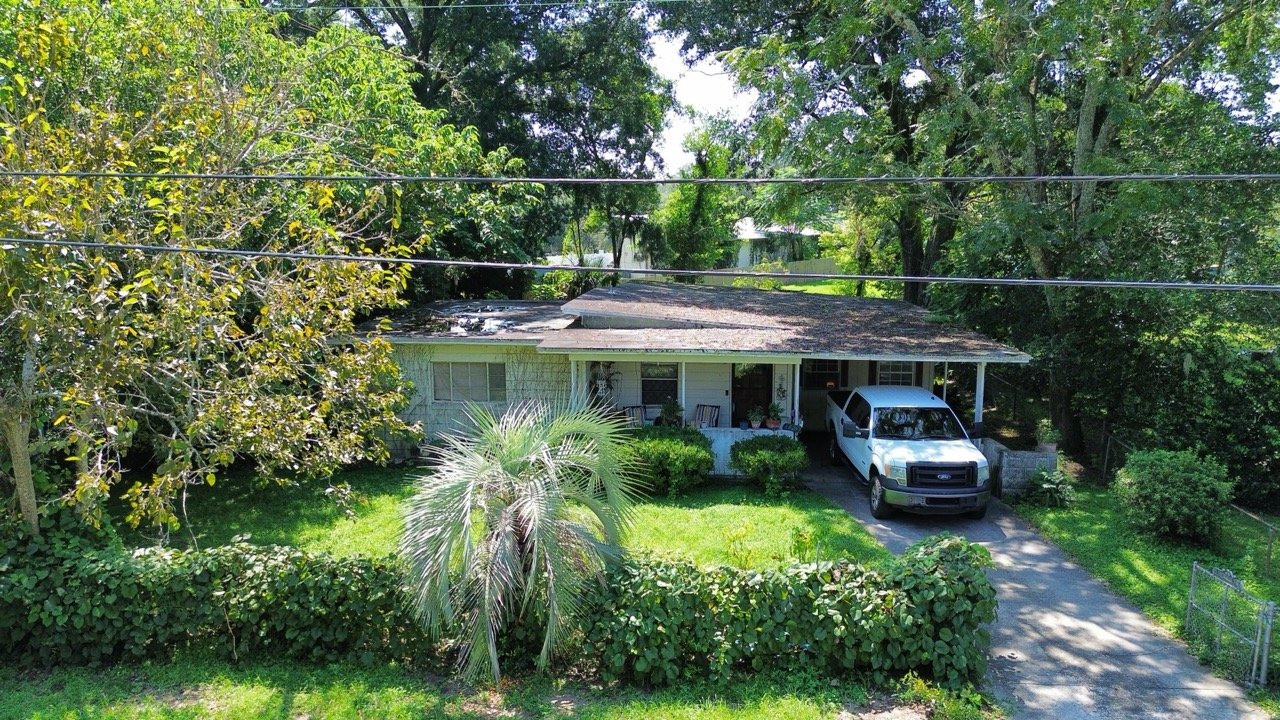
I want to start doing more of these breakdowns, because the polished version of a deal you see on social media never shows the actual work. So here’s one, start to finish, warts included.
The Setup
A property came across my radar in an established Jacksonville neighborhood. Small concrete block house, built in the 1950s, sitting on a solid lot in a subdivision with real, consistent sales activity. On paper it looked like a straightforward deal. In practice, it was anything but, because the property had two separate owners who hadn’t spoken in years and didn’t want to.
Here’s how that happened. The original owner passed away, and the property went through probate to her two children. One of them, I’ll call him Ray, kept living in the house, paying the bills, and doing the day to day upkeep. The other, his sister, was going through a hard stretch in her life and sold her half of the property to an outside investor for a fraction of what it was worth. She didn’t tell Ray before she did it.
You can imagine how that landed. Ray felt blindsided that a stranger now owned half of the house he’d been maintaining for years, and he wanted nothing to do with the investor who bought his sister’s share, I’ll call him Steve. Steve, for his part, had gotten his half at a steep discount and had no urgency to do anything with it. No renovation, no partition lawsuit, nothing. He just sat on it.
That’s a common pattern with partial interest purchases. Whoever buys the first half almost always gets a discount, because it’s a messier, riskier position than owning the whole thing outright. And once they have it, there’s often no rush to resolve it, especially if the other owner is difficult to deal with.
Meanwhile Ray’s portion of the property had fallen behind on taxes, to the tune of around $5,700, and the county had it scheduled for a tax deed auction. If that auction happened, Ray stood to lose whatever equity he had left in the home he’d lived in for years, and Steve would be dealing with a whole new owner on the other half, likely someone far less patient than he’d been.
That was my way in.
Negotiating Two Deals At Once
I made contact with Ray first. He was in a tough spot: he didn’t have the money to clear the back taxes, he was on a fixed income, and the auction date wasn’t moving for anyone. I walked him through his options honestly, including the option of doing nothing and letting the property go to auction, which almost never works out well for the person living there.
We agreed on a price for his half, structured so the back taxes would come directly out of his proceeds at closing, which meant I didn’t have to front that cost separately. Because he needed time to arrange his next living situation, I built in a leaseback: 30 days to move out after closing at no cost to him, with a modest per-day penalty if it ran past that, and a portion of his proceeds held back in escrow until he actually handed over the keys. That last piece matters more than people think. Without it, you’re just hoping someone moves out on schedule. With it, you have actual leverage if they don’t.
Midway through, my insurance quotes on the property came back higher than expected, on top of a repair estimate that had crept up once I looked closer, and I still had to account for the legal cost of resolving the ownership split with Steve if he wasn’t cooperative. I went back to Ray and told him straight that I needed to adjust the price down. I don’t love having that conversation, but I’d rather be upfront about it than let someone find out at the closing table. He took it well, mostly because I’d already given him a heads up that it might happen if my insurance quotes didn’t come down, and they didn’t.
Separately, I opened a conversation with Steve. He’d been sitting on his half for years with no real plan, and once he saw I already had Ray’s half under contract, the math changed for him. Holding a minority stake next to an active, motivated buyer is a very different position than holding it next to a passive family member. We agreed on a price for his half as well, using a standard state contract this time rather than the custom agreement I’d used with Ray, since Steve wanted something more conventional.
Two separate negotiations, two separate contracts, two separate closings, on the same house, running in parallel. Neither owner needed to know the exact terms I gave the other, and there was no reason for them to. That’s not being shady, that’s just how you keep two independent negotiations from contaminating each other.
Funding It
I financed the acquisition through a private lender I’ve worked with before, structured as a short term loan secured by a mortgage on the property once I owned it outright, with a flat fee instead of a monthly interest rate. Simple, no surprises, paid back out of the eventual resale.
One thing worth mentioning for anyone doing a deal like this: when your lender’s paperwork comes back, read it closely. The mortgage document I got back was drafted as a second mortgage, which would have made no sense here since there was no existing first mortgage for it to sit behind. Easy fix once caught, but it’s exactly the kind of detail that slips through if you’re moving fast and not checking the actual documents line by line.
The Buyer Standoff
I lined up an end buyer to take the property once both halves closed and Ray’s leaseback period ran its course. Numbers worked well for a buy and hold or a light value add flip, given the ARV on the block. But before he’d send his deposit, the buyer wanted to see my underlying purchase agreements with both sellers.
I get the instinct. Nobody wants to wire money into something that might not be real. But handing over your source contracts to an end buyer before they’re committed is one of the fastest ways a wholesaler gets removed from their own deal. If a buyer has the sellers’ names and numbers in hand, there’s nothing stopping them from going around you.
The fix was simpler than the standoff made it feel: have the title company confirm, in writing, that fully executed contracts on both interests were in hand and the file was ready to close, without disclosing price or seller contact information. That gives a buyer the actual thing they’re asking for, real assurance the deal exists, without exposing the one thing that protects your position. That deal ultimately didn’t move forward for other reasons, but the lesson stuck: verify without exposing.
Where It Stands Now
Both closings went through. Ray is working through his leaseback window and has family nearby lined up to move in with. Once he’s out, the plan is a straightforward cleanout and a listing with a local agent who knows the neighborhood, rather than a full rehab. The numbers pencil out fine as a clean, as-is resale, and I’d rather take a faster, simpler exit than sit on carrying costs chasing a bigger number.
What I’d Want You To Take From This
If you own a property with a family member, an old partner, or an inherited co-owner you don’t talk to anymore, you are not stuck. There are ways to unwind that kind of situation that don’t involve years of legal fighting or losing everything at auction. If you’re staring down a tax deadline and don’t see a way out, reach out before the date on the notice becomes the only option left. And if you’re an investor building out deals like this yourself, the two things that will save you the most headaches are getting your leaseback terms in writing with real teeth, and never handing over your source contracts before a buyer has actually committed.
If any of this sounds like your situation, or you just want to talk through what your options might look like, reach out. That’s exactly the kind of problem I like solving.